
Wednesday, June 30, 2010
Required Listening
Delivered in 1994, I think this concise, one hour speech by Ed Griffin remains the single best primer to understand the macro business environment in modern America:
http://video.google.com/videoplay?docid=638447372044116845#docid=-8484911570371055528


Monday, June 28, 2010
Green Exit Strategy
http://www.marketwatch.com/story/tesla-motors-revs-up-244-million-ipo-2010-06-28
Remember, selling to the public happens after the private owners feel they've taken an idea as far as it can go.
Thursday, June 10, 2010
US Government Scrambles to Limit its Oil Liability
http://www.property-casualty.com/News/2010/6/Pages/NFIP-Will-Cover-HurricaneDriven-Oil-Damage-FEMA-Confirms.aspx
WASHINGTON—The National Flood Insurance Program will pay claims for damage to homes and contents from oil driven ashore during hurricanes, its officials have announced.Translation: "We won't cover significant damage from oil."
In a statement, Rachel Racusen, press secretary to the Federal Emergency Management Agency (FEMA), which runs the flood program, said, "The mixing of oil and other pollutants in flood water is not unusual during a storm."
She added, "Damage caused by these pollutants in flood waters is covered under the NFIP, subject to the provisions in the Standard Flood Insurance Policy."
Effectively, Racusen confirmed what Mississippi Insurance Commissioner Mike Chaney told state residents in a statement released Tuesday by his office.
In the statement, Chaney said that to recover damages stemming from the additional risks oil poses should a hurricane strike, claimants seeking payment under the NFIP must prove there is a flood as defined in the standard flood insurance policy.
If that can be proven, Chaney said, damage caused by pollutants to commercial policies is limited to $10,000.
Home and condo payments will be limited to policy limits, and oil or water with oil in the yard is not covered.
Chaney further said that the cost of complying with any local or state ordinance, including one that requires special removal methods for oil, is specifically excluded, with the exception of certain floodplain management mitigation requirements.
Moreover, Chaney said, there will be no coverage for testing for, or the monitoring of, pollutants unless there is a law or ordinance requiring it.
Wednesday, June 9, 2010
How Low Can We Go?
It's easy for human beings to conceptualize the infinite potential for gains. "If I buy this stock for $36/share", we dream, "it could go to $100, then a million, then a billion," and so on..."
Why is it so hard to comprehend the same unbounded realm with regard to loss?
Not comprehending the infinite distance to zero is a critical failure of our human imagination. "If I have a million dollars, that is all I can lose," we rationalize, "my losses are always limited to what I can understand."
That is so wrong.
Your potential losses are just as infinite as your potential gains. If I have an airplane and a boat, and I lose the plane, I am limited to sailing. If I lose the boat but still own my car, I am limited to driving. If I lose my car and have a bike, I am limited to riding. If I lose my bike and own a pair of shoes, I can walk. If I lose a shoe, I will hop. If I lose my other shoe, I will fashion a pair of shoes from scraps. If I can't find canvas, I will use cardboard. If I wear the soles of my feet raw, I will crawl. If...
Astute readers may sense infinite opportunity here, as it pertains to shorting. But the real purpose of this post is to get you thinking about the infinite potential of your life to change, especially if you fail to imagine the possible.
One exercise we should accomplish is to imagine that the money in our wallet represents our last few dollars on Earth. How do we act? How close can we get to that mindset? The closer we can get now, the father away zero will be.
Tuesday, June 8, 2010
PM Update
Anon wrote: Just a question on gold. Perhaps you can point to the right post if already answered this.Why are you expecting a big correction in gold in...
I've addressed PMs quite a lot throughout the blog. My basic position hasn't changed since I went long gold in the early 00's, then jumped off the bandwagon too early in late 2007, still bagging a 300% gain. Yes, I've given back 20% on that position, still on paper, but I'm not worried at all about it morphing into another huge gain. The reason I phased in long in '03 is the same reason I'm short now:
PM prices are driven purely by liquidity.
That's why PM prices act like paper stocks, usually with less volatility. Any genuine change in supply and demand has been dwarfed by an 80+ year sea change of inflating cash liquidity. Since prices deflated to major lows in 1932, the Dow (which in no way reflects individual stock prices) has increased from 40 to 10,000. Gold only inflated from $20 to $1235. Paper stock indexes are a much better inflation hedge than gold.
The quantity of counterfeit cash printed by commercial banks (contrary to popular belief, the US government cannot and does not print money), then laundered into borrowers' names has been plunging since it peaked in late 2007. There are NO signs of that letting up. To the contrary, prices ushered in by The Great Recession still dwell near all time highs. Our Depression hasn't even started rolling, it is in its infancy.
As liquidity dries up, precious metals, nothing but dead metal to reflect the amount of paper in circulation, get priced lower. The outcome is as certain as prices rising during inflation of the cash supply. The timing of the macro price decline is more difficult, as this event big is far bigger than our lifetimes, thus, day-to-day price movements are anyone's guess. But with W3 down maturing, my goodness, you have to LOVE the opportunity to short any asset still clinging to all-time price highs.
So I think gold presents a unique opportunity to capture 100% of the coming depression price declines, the single place you can still jump into an empty bandwagon. Although silver is almost 70% lower than its all-time highs, I think its emerging duality as a precious/industrial metal makes it an even more attractive short, as industry tanks hard.
Thursday, June 3, 2010
Twice in a Lifetime
At Dow 14,000, I described the situation as once in a lifetime opportunity to get short. That was the beginning of W1 down. Here we sit at W3 down, the most devastating wave, and it's Deju Vu alloveragain. Some will ask: How can you be so sure this is W3 down? Didn't it take longer than expected to develop?
The answer to question 1 is, you can never be sure, but it doesn't get much better than this. We had a crippling mega 5-wave down to kickoff our colossal bear, followed by a perfect 62% retrace.
The answer to question 2 is, the most common W2 retracement, especially in a major degree movement, is 62%. It's hard to argue with nature on that basis. The W3 down that follows should be unmistakable and devastating. Again, it's hard to argue that an "inexplicable" 1,000 point cliff dive isn't a suitable W1 of W3.
Accenture lost their entire $30B market cap in a matter of minutes, as the stock dove from $44 to $0.01 and stayed there for several minutes. Most of the shares changed hands from heavily vested owners to traders, some with little to no cost basis. Mind you, this is a "recession proof" stock with 60% of its 170K employees located overseas, with years of extreme growth under its belt--a little like the sewing machine stocks of the late 1920s (see first quote below).
That market malaise took days to sort out. Still, no one knows how to properly handle many of the transactions. Parallels to the death throws and two year collapse of the "Big Bull Market" (so it was called in 1929) are unmistakable, but no one wants to say so out load. Before "the glitch," which was simply an absolutely accurate manifestation of market value met with late, dozing government intervention, every scholar on the face of the Earth would have testified under oath it was utterly impossible to overwhelm our modern trading system.
In fact, as many Black Swan'ers have pointed out the past several years, modern complexity = ever-increasing market fragility. Speed of light trades that travel through the dark of night are, of course, infinitely less robust than a paper system with some form of physical tracebility.
I'll close with the wisdom of dead people:
"To give one single example: during the bull market the common stock of the White Sewing Machine Company had gone as high as 48; on Monday, October 28th, it had closed at 11 1/8. On that black Tuesday, somebody--a clever messenger boy for the Exchange, it was rumored--had the bright idea of putting in an order to buy at 1--and in the temporarily complete absence of other bids he actually got his stock for a dollar a share! The scene on the floor was chaotic. Despite the jamming of the Communication system, orders to buy and sell-mostly to sell--came in faster than human beings could possibly handle them; it was on that day that an exhausted broker, at the close of the session, found a large waste-basket which he had stuffed with orders to be executed and had carefully set aside for safekeeping-and then had completely forgotten."
...
"Coolidge-Hoover Prosperity was not yet dead, but it was dying. Under the impact of the shock of panic, a multitude of ills which hitherto had passed unnoticed or had been offset by stock-market optimism began to beset the body economic, as poisons seep through the human system when a vital organ has ceased to function normally. Although the liquidation of nearly three billion dollars of brokers' loans contracted credit, and the Reserve Banks lowered the rediscount rate, and the way in which the larger banks and corporations of the country had survived the emergency without a single failure of large proportions offered real encouragement, nevertheless the poisons were there; overproduction of capital; overambitious (expansion of business concerns; overproduction of commodities under the stimulus of installment buying and buying with stock-market profits; the maintenance of an artificial price level for many commodities, the depressed condition of European trade. No matter how many soothsayers of high finance proclaimed that all was well, no matter how earnestly the President set to work to repair the damage with soft words and White House conferences, a major depression was inevitably under way.
Nor was that all. Prosperity is more than an economic condition; it is a state of mind. The Big Bull Market had been more than the climax of a business cycle; it had been the climax of a cycle in American mass thinking and mass emotion. There was hardly a man or woman in the country whose attitude toward life had not been affected by it in some degree and was not now affected by the sudden and brutal shattering of hope. .With the Big Bull Market zone and prosperity going, Americans were soon to find themselves living in an altered world which called for new adjustments. new ideas, new habits of thought, and a new order of values. The psychological climate was changing; the ever-shifting currents of American life were turning into new channels.
The Post-war Decade had corne to its close. An era had ended."
http://xroads.virginia.edu/~hyper/allen/ch13.html
Oilcanes
How long are we going to wait to evacuate people residing in coastal regions from Texas to Florida? Do we even have an estimate of the deaths and damage that will result from the first oilcane?
Wednesday, June 2, 2010
PW Update
With the recent market tumble and the mini spike in PMs, my VSE portfolio was zero % return as of PM opening prices this morning (worth 102K/100K, or +2%, but close enough). So, given Marketwatch.com VSE's inability to fix a reverse split of 1 for 10 on a short position, I took this opportunity to eat a percent or two; it is time to adjust my portfolio anyway. PW should work from here forward.
Sunday, May 30, 2010
Terror in the Gulf
As soon as news of the gulf oil spill became public, the Russians suggested the only way to stop it was by nuclear detonation on the ocean floor. A suggestion met with skepticism, at best.
First, it seemed odd, to me anyway, that the Russians had any opinion at all, let alone such a quick and controversial response to a problem few understood, perhaps no one. Or, perhaps someone. As the more ominous nature of this spill takes shape, let us wonder openly about a few things:
How many accidents happen where there can be no reasonable establishment of causality? 1 in 100? 1,000? Is there even a way to estimate the un-likelyhood? Even an asteroid strike can be assigned certain cause, a well understood risk lurking in the heavens.
How many oil rigs spontaneously combust?
How many of those gush at the ocean floor, a mile down?
How many of those create a pool of oil in the middle of the most famous hurricane landing point in the world, which also happens to be upwind of the most envied country in the world?
How many of those can amass a giant pool of oil from leak to beach, without leaving enough time to clean it up, just before the beginning of hurricane season?
Not many.
Let's assume the only way to relieve such a deep gusher is by re-drilling next to the site, an act that cannot be physically completed in less than several months. Let's assume such timing is well understood. Let's ponder the potential wreckage of several times the current spill, being repeatedly blanketed atop the southern and eastern United States.
Freak accident? I think the odds against it. Let's pause before taking that all to timely Russian advice.
Saturday, May 29, 2010
Economic Breakdown
In USD: Shape of things to Come I posted the following:

At the time, I pointed out that the US Dollar has been in a raging bull market for almost two years, a belief shared by, well, no one!
So equating that EW fractal forecast to today, here we sit, on the naked edge of the most ominous economic disaster in human history:

Those who understand this blog know that our dollar's unprecedented, years-long bull market, against all other major currencies, has nothing to do with US economic strength. Rather it has everything to do with US economic weakness. There is no "flight to safety." There never is. What there IS is a collapse in lending from US consumer credit exhaustion, and that has drying up the US dollar supply since late 2007. The collapse of US cash supply is what spikes the value of surviving dollars.
Less bank-printed cash sloshing around to compete for assets, means prices will continue to fall, and the fractal indicates a massive spike in $ value looms in our immediate future. That means falling prices denominated in dollars and an acute spike in bank failures. Less US cash in circulation also means each surviving dollar will buy more foreign currency, sending the Euro and EU into a graveyard spin from which it will never recover (not in our lifetimes, nor our children).
The purple arrows, above, show a rough fractal equivalency. Will the EU collapse very soon? Yes. Is it the fault of the EU? Absolutely. They are fully linked to US economic activity due to a stagnant, predominantly socialist economy. But as the world tumbles into the abyss, it is important to understand that the economic driver of the EU's demise is a lack of US bank-printing/lending, eradicating US and thus world-wide liquidity.
Hold on. Sell assets for dollars while you still can (especially unload precious metals). Avoid large banks, especially Bank of America. Hoard US cash and treasuries.
If EVER there was an appropriate time to unleash the fury of Cashzilla, that time is now:

Friday, May 21, 2010
Quick Update
Each time I take a trip it seems to be a market top. No change to the outlook. Will return in June and will try to get out an update before then.
My active Dow forecast remains unchanged (see Open Market Forecasts, below), Dow 3,800 by 2012.
On a side note, Portfolio Watchers will need to some manual calcs. Marketwatch VSE is unable to fix a 1 to 10 reverse split for one of the portfolio ETF symbols. I'll probably move it to a new site, but there is no change to the core stock positions. I updated the overall portfolio percentage on the blog by xls calculation.
Friday, April 2, 2010
Cooking the Jobs Report
If ever there was evidence that government agencies are sensitive to political pressure (no!), todays jobs number is it.
After hiring 1.25M workers for the census (a waste of $22/hour on a political battle unrelated to the original purpose of the census), will the BLS use this opportunity to bury millions of lost jobs that they've been saving up? I wonder....
Any useful job-counting method would show +1.25M this cycle, at least as a starting point. Let's see how reliable and accurate the BLS really numbers really are. The implication of a number that isn't reasonably close to +1.25M is twofold:
1) It shows the true state of the economy, X - 1.25M = R (where X is the BLS' "saved-up" number and R is reality)Of the two, #2 is the bigger problem.
2) It will reveal with certainty that our unemployment stats are cooked
Saturday, March 27, 2010
Images of Universal Heath Care
Insurance beneficiary:

Doing what must be done to stay covered:
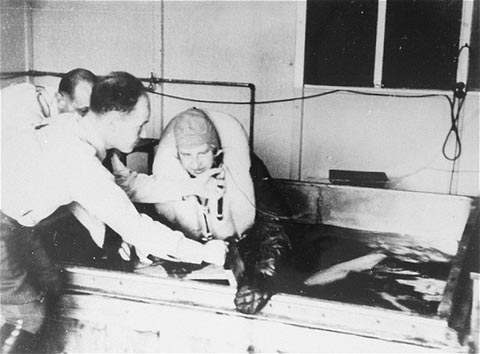
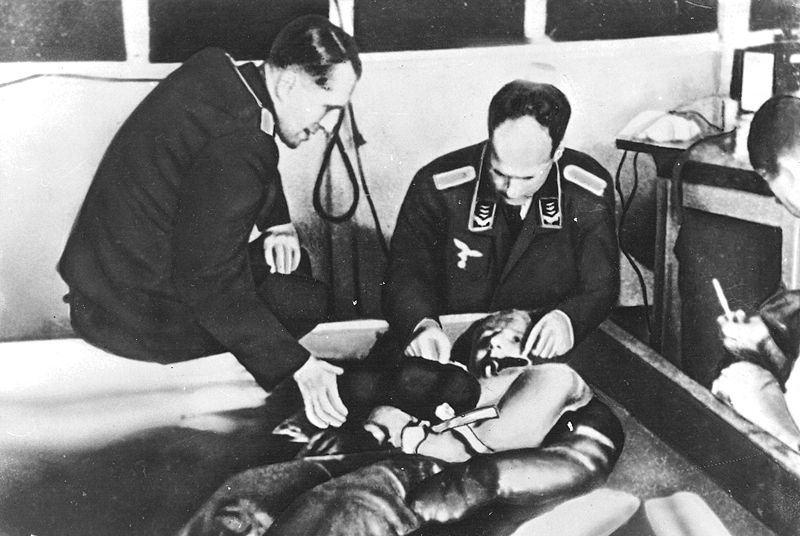
A medical screening:

Many were able to choose their own doctor:

Children that benefited from automatic coverage;

Wednesday, March 24, 2010
ZOOM..... ... . ... . . .. .
From my Nov and Dec 2009 article USD: Shape of things to Come:

And off we go...

In the big scheme of things, time is short. As usual, I recommend a one year (minimum) cash reserve under your own roof, enough to pay all bills and essentials. Keep the rest in a US Treasury account--no longer term than the end of your hard cash and ladder the rest. Simple enough.
There is No Party of No
Marketwatch.com posted another pro-movement piece today, titled "Party of No Fails" cocerning universal health care. My response follows:
There is no "Party of No." Both parties desperately want this and are both part of the ongoing Socialist/Marxist coup.
The Repubs are on the story board to make people feel like they have a voice. You don't.
The predetermined vote margins are an important clue. By barely passing this bill, the Supreme Court (also on the Fed dole--look no farther than Justices now taking their paycheck in private-issue Federal Reserve bank notes--a woefully unconstitutional act) can easily pin the tail on each and every State suing the Federal government as solely responsible for passage in the first place. Nebraska suing up front is a perfect example.
The purpose of flooding the Supreme Court with law suites filed by the same States who were responsible for shoving the bill down peoples throats, is to quickly establish a pro-coup precedent that prevents citizens from taking court action.
Tuesday, March 23, 2010
The Dow Jones Marketing Index
I think some people believe the Dow Jones Industrial Average has something to do with stock performance. That's not exactly the case. The Dow is a sales gimmick, a trick that is played on people to steal their money. Take the following quiz to see if you understand the DJIA:
Directions: Please assume nothing changes exept the Dow components in question, then pick the BEST answer. Don't scroll down until you are finished, the answers are listed below.
1.) If Citigroup stock went to $0 tomorrow, the Dow would:
a. Not change2.) Citi stock goes to $0, at the same time IBM announces a new CEO and rises 4%, the Dow:
b. Drop 360 points
c. Drop 180 points
d. Drop 712 points
a. Goes up
b. Goes down
c. Stays the same
3.) GM was replaced by Cisco on June 1, 2009. On June 2, 2009, Cisco needed to climb ___% to equal the effect of GM's stock plunging -50% just a few days prior.
a. 3
b. 115
c. 50
d. 200
4.) If Microsoft stock goes from $30 to $60 tomorrow, the Dow will climb:
a. 135 points
b. 410 points
c. 40 points
d. 1,200 points
5.) If every Dow component rises $1 tomorrow, the Dow will rise:
a. 240 points
b. 30 points
c. 300 points
d. 90 points
6.) Which relationship is true with respect to making the Dow move:
a. Alcoa + BofA + Citi+ GE + Intel + Kraft + Pfizer = IBM
b. J&J = Kraft
c. Citi + BofA = JP Morgan Chase
d. Caterpillar + Chevon + Disney = Exxon
7.) If a given Dow component falls today:
a. Tomorrow it is weighted less8.) How many of the original Dow components are still part of the Dow?
b. Tomorrow it is weighted more
c. Tomorrow it is weighted the same
a. 0
b. 1
c. 7
d. 12
9.) 3M is 5 times more important than Pfizer.
a. True
b. False
10.) If 3M goes from $82 to $83 at the same time Pfizer goes from $17 to $16:
a. The Dow will not changeI added one more question to clarify a comment...
b. The Dow goes up 50 points
c. The Dow goes Down 50 points
11.) If 15 of 30 Dow components go down 1% per day, and the other 15 components go up 1% per day, after 30 days the Dow would (hypothetically assuming all Dow components started out equally weighted, and the index started at 10,800):
a. Go up to 11,240
b. Go down to 10,400
c. Not change
Answer (a) is always correct.
Sunday, March 21, 2010
Waves of Human Civilization
Anon wrote: "FDRAOA, any chance could you post some longer-term charts showing your wave counts - maybe one showing the count from the market top in 2000 and one that includes the 1930s and maybe even a multi-century one?"
Great question, thanks for asking. I'm not sure a chart would be of much use, since accurate price data is iffy beyond a century or so. But general trends are pretty clear. There are lots of potential very long wavelength EW possibilities and interpretations, so which ones you buy into are obviously up to you.
Wave personalities are important and should align with the time period. As we talk through each set of waves, remember that all (W1-W2)s should be fractally self-similar to the larger degree W12345ABC, of which they form the first two waves.
With that in mind, these are my thoughts. I've never seen EWs dissected quite this way before, but I'm sure it has been thought-through by many.

Biggest picture (the Waves of human civilization):
W1 - Roman Empire
W2 - (Deep Zig Zag) Dark Ages and Crusades
W3 - Renaissance
W4 - (Sideways) Exploration and consolidation of the New World
W5 - Era of Modern Central Bank Looting (BoE counterfeiting model)
WA - Now forming
WB - TBD
WC - TBD
Lesser degree discussion:
In W1, we see a frenzied, extended top that culminates in the severe overconfidence of a single Global Super-Power, the Romans, followed by a total currency collapse as money evolves from hard precious coin to banker-fiat, finally ending in barbaric warfare against an "invincible" professional army; the barbarians eventually win outright.
In W2 we have centuries of lost culture, suffering and famine, seemingly endless wars and unthinkable brutality. W2 is a fractal match to the era we are slowly slipping into today.
In W3 mankind rediscovers culture and civility in an explosion of creativity and scientific competence.
In W4 we explored new worlds and consolidated them into existing economic relationships.
In W5 the Bank of England invents and asserts itself for the purpose of royalties paid by the globally less sophisticated to the lazy, inbred global king pins of a massively corrupt criminal underworld. W5 culminates with the rise and (coming) fall of the modern Federal Reserve system.
Lesser degree discussion:
Let's only talk the internal structure of W5, above, the Era of Modern Central Bank Looting.
W1 of W5 - BoE creates the South Sea Bubble (1694-1725)
W2 of W5 - (Deep Zig Zag) Crash of 1730
W3 of W5 - Economic Rise of New World (America and Far East) (1730-1776)
W4 of W5 - (Sideways) BoE causes American Revolution and plunder of Far East (late 17th century)
W5 of W5 - American Capitalism (1785-ish to 2000)
Let's only talk the internal structure of W5 of W5, above, the fifth wave of the Era of Modern Central Bank Looting.
W1 of W5 of W5 - Hamilton resurrects BoE ties in the form of FBUS/SBUS
W2 of W5 of W5 - (Deep Zig Zag) Andrew Jackson sends BoE packing, all currency is extinguished
W3 of W5 of W5 - Jacksoinan era sparks Industrial Revolution
W4 of W5 of W5 - (Sideways) WWI thru Great Depression (nothing compared to 1836-42)
W5 of W5 of W5 - 1932 to Present
W1 of W5 of W5 of W5 - New Deal socialism sputters (1932-1939)
W2 of W5 of W5 of W5 - WWII (1939-1942)
W3 of W5 of W5 of W5 - Rise of modern American might (1942-late-60s)
W4 of W5 of W5 of W5 - Late 1960s dopers (now in charge of America) thru Vietnam
W5 of W5 of W5 of W5 - 1974-2000 Rise of mega-government-enabled Central Bank Looting
W1 of W5 of W5 of W5 of W5 - Gerald Ford
W2 of W5 of W5 of W5 of W5 - Jimmy Carter
W3 of W5 of W5 of W5 of W5 - Ronald Reagan
W4 of W5 of W5 of W5 of W5 - George Bush I (closet aristocratic socialist)
W5 of W5 of W5 of W5 of W5 - Bill Clinton
After 5 completed movements of fractal degree, all waves reverse and begin their ABC. Note, Wave A may also subdivide into 3 waves, which is my prefereed count.
WA of WA of W5 of W5 of W5 - George Bush II (closet aristocratic socialist)
WB of WA of W5 of W5 of W5 - "
WC of WA of W5 of W5 of W5 - Barack Obama (still unfolding)
...completion of WA bottom, around 2012
There are various ways to interpret the opening stages of the long, grinding collapse of Planet Earth, but it's mostly academic. Centuries-long Dark Ages to follow....
Health Care Bill to Collapse the World Economy
It never stops amazing me how EWs forecast human events so reliably.
Over the past several years, I've been saying that although I don't know what the news event will be, some news event or group of them will collapse the global economy as a tidal Wave 3 down takes hold.
As we sit at the completion of the lower degree W2 of that mammoth Wave 3 down, confirmed in virtually all markets, and yesterday we completed (or nearly completed) an even smaller degree W2 of momma W3 herself, it seems clarification has arrived.
CLICK TO ENLARGE

Saturday, March 20, 2010
First Day of Spring Buries West Texas Under a Foot of Snow
Record snowfall is continuing into Spring as the normally sweltering deserts of western Texas get blasted by another record blizzard.
The Fort Worth Star-Telegram held it's first-ever snowman contest, receiving more than 400 entries. Six received praise:
'Marshmallow Man' look-alike
Erick Thomas and family, Arlington
This snowman had staying power: seven days, to be exact. It's no wonder, at 13 feet tall and 10 feet wide (including the arms made out of 2-by-4's). Thomas, his daughters -- ages 8 and 5 -- and a neighbor worked on this mammoth man in Thomas' front yard for two days.
"We were just making a snowman and decided ... we might as well do it as big as we can," he said. The eyes are made of beer bottles and the mouth is made of charcoal.
It became a neighborhood tourist attraction. "A lot of people stopped by, got out and took photos," he said.
Think tank
Rosalie Kobetich, Lipan
"While passing the commode in our pasture -- which usually is filled with flowers -- the idea occurred to me to build The Thinker," says Kobetich, who is a painter and a member of the Weatherford Art Association. The 5-foot-3 snow sculpture took about 90 minutes to complete by herself and is adorned with a branch of pine needles.
"Unfortunately, he lost his head the next morning because it got pretty mushy out there," Kobetich said. "Too bad he didn't stay longer."
Snow warrior
Jim Walter, Burleson
"This is a statue of a Viking warrior standing on the deck of his long boat, but we didn't have enough snow for the boat," Walter says.
During the snowfall, Walter's family had six different snowman projects going on their pasture, and they were scrambling to complete them before the snow melted. The Viking was his idea. This menacing warrior, holding a spear in his left hand, eventually sunk back into history.
Cold sweat
Michael and Tammie Baker, Fort Worth

"My wife and I exercise together," says Michael Baker. "I run, and she follows me on her bike. We thought that our snow people should reflect our hobby, so we built a runner and a rider in front of our home."
This cardio-tastic snow couple are wearing the Bakers' own clothes and shoes (the race number is from last year's Cowtown Marathon) and using their own bike and ear buds. The hardest part was balancing the one on the bike.
So did they work out after they built their snow avatars? Baker laughed. "That was our exercise for the day."
Snow dragon
Sarah Blaido, Hurst
Sarah, 16, spent three days sculpting this dragon. The home-schooled high-school sophomore "really wanted to do a dragon because it's my favorite thing of all time," she said. She filled up big bins with dense, clean snow and built the rear first, then the middle and front sections. It measured 8 to 9 feet long.
Unfortunately, not many people got to see her creation before it melted. "On the last day, I was just putting on finishing touches when the sun came out, and it immediately started melting," she said.
Global warming protest
Curtis and Melissa Reeves, Weatherford "Thirty snowmen held a global warming protest in Weatherford," the Reeveses said in their clever entry. "The protest ran for two days before the crowd dissipated. No injuries were reported. However, the protesters did leave their signs on our sidewalk."
It took the husband-wife team a few hours to create this snowy scene; each snowman was about a foot tall. It looked especially neat when the candles were lit at night, they said. However, all the snowmen eventually fell victim to the warming trend.
Friday, March 12, 2010
TRADING ALERT: Too Much Liquidity is Your Friend
I've often talked about the evils of Federal Reserve corporation counterfeiting, but sometimes it is your friend. Today's stock market is a good example...
Over the past 97 years, the Federal Reserve has slowly flooded our markets with funny money, creating the greatest global market hyperinflation since the BoE engineered the South Sea Bubble.
Think of modern-day hyperinflation as the water level above an ocean floor. There are features on the floor that the make underlying terrain unique, like a variety of financial different markets should behave, each with its own, independent and characteristic, price behavior. But after you flood the earth with liquid, baseless paper in the metaphor, the water level eventually drowns the interesting features below, and coincident waves of liquid cash create the dominant force driving prices of all markets.
The DJIA is a perfect example of hyperinflation. Since its low of 40 in 1932, the original Dow 30 index has kicked every company out except GE. And yet, this shadow of a ghost, that one-thirtieth of what $40 used to buy, now sells for a little over $10,600. Literally, it takes a wheelbarrow full of worthless paper cash to buy what little remains of the 1932 Dow.
The "evil" part is that the Federal Reserve has sold The People of the United States mountains of this worthless paper in exchange for real assets; those assets are gone (to the Fed's private owners). So what's the "good" part? Why is Fed counterfeiting our friend at the moment?
For the answer, see the chart snippets below. As of today, we sit at the top of a minor W2 of a major W3 in virtually every market. Why do all the counts interlock? $10,600 of pure paper liquidity flooded on top of every $1 or $2 dollars of 1932 value. These counts are dominated by nearly 100 years of mounting hyperinflation.
Proof? Look no farther than P/E ratios, floating almost fifty-fold above the 1932 ratio of 5. That is exactly what you'd expect as the result of hyperinflation.
Am I predicting hyperinflation? No. I am pointing out that it has already occurred. It is the dominant force driving all market prices today.
Stocks, oil, gold, silver, corn, cattle, you name it, and of course, inversely, the dollar--all waves are aligned on this March 2010 morning--and in all cases, a major downward W3 is forming (the USD being reversed: about to explode upward).
Every table is set, or already in breakdown. The charts below are all 3 months long. Minor details are more clear in some than others, but it doesn't matter, if you can count one, you have counted them all.
Idealized Impulsive W1-W2 (downward):

Oil (already in breakdown):

Silver (already in breakdown):

Gold (already in breakdown):

Stocks (about to breakdown):

Subscribe to:
Posts (Atom)


